

Gladioli have adorned our flower beds and front gardens since time immemorial. Gardeners are not ready to give up these stately beauties, even though they require special attention at all stages of their development. Even in the fall, doubts and difficulties arise: is it time to dig them up? What to do with the babies? How best to preserve them... In winter or early spring, mold may appear, or sprouts may emerge prematurely. What do you think you should do? We will answer the 15 most pressing questions about preserving gladiolus corms.
1. Should the roots of gladiolus corms and the husks of the bulbs be removed?
The answer to the first part of the question is clear: old roots should be removed before or after drying. This can be done in different ways: cut with scissors or by hand with a slow twisting motion (similar to removing young shoots from conifers when forming the crown).
 Tuber bulbs cannot be stored in this form. Photo by Tatyana Kagaritskaya
However, opinions differ on whether to remove the gladiolus bulb husk. Some growers do not remove it because the husk is quite thick, and removing it could damage the bulb itself. Others are convinced that young sprouts will not be able to break through the dense outer shell and remove it, for example, by picking it with a fingernail. There is also a compromise option: clean large bulbs, where the husk is easy to remove, and leave small ones, where it is difficult to remove, “in their clothes.
2. Why are the corms limp after digging?
The fact is that gladioli replace their old corms with new ones during the summer. However, if the old bulb was planted late and did not have time to bloom, it may happen that by the time of digging, the young corm has not fully formed, and the old one has lost its turgor.

Typically, only freshly dug corms should be firm and elastic. Photo by Galina Shlendina
In addition, young gladiolus corms can also be sluggish if the stem has long since dried out and they have been lying in dry soil for some time. This situation is critical for the future: such corms germinate poorly and produce weak flower stalks.
3. Will gladiolus bulbs that have been peeled be stored?
Before being put into storage, gladiolus corms undergo several mandatory preparatory stages, including preventive treatment against diseases and pests and thorough drying. As for removing the covering scales, I don't have any clear opinion from you. Some gardeners leave them on, believing that this way the bulb will lose less moisture during storage. Others want to be sure that only healthy specimens are selected for planting, so they “undress” the bulbs to examine them carefully and immediately remove those affected by pests or diseases.

The covering scales can be removed before planting. Photo by Svetlana TO
In any case, gladiolus bulbs need to be stored in optimal conditions, so both “clothed” and “naked” bulbs will survive until planting.
4. Gladiolus corms have doubled. Do they need to be separated?
As a rule, the higher the quality of the gladiolus variety, the fewer new corms and offspring it produces. Sometimes, two young bulbs that have grown close together are mistaken for fused bulbs.
 Сдвоенные клубнелуковицы гладиолусов. Фото Татьяны ТО
Moreover, this phenomenon “works” as a varietal trait: if a particular variety of gladioli consistently produced one young corm and suddenly began to produce “twins,” this is considered a deviation. It is better to discard such plants, as their flower stalks grow fragile, bend, and the flowers become smaller. In the future, you should continue to diversify with single young corms.
5. Strange growths on gladiolus. What are they, and what should you do?
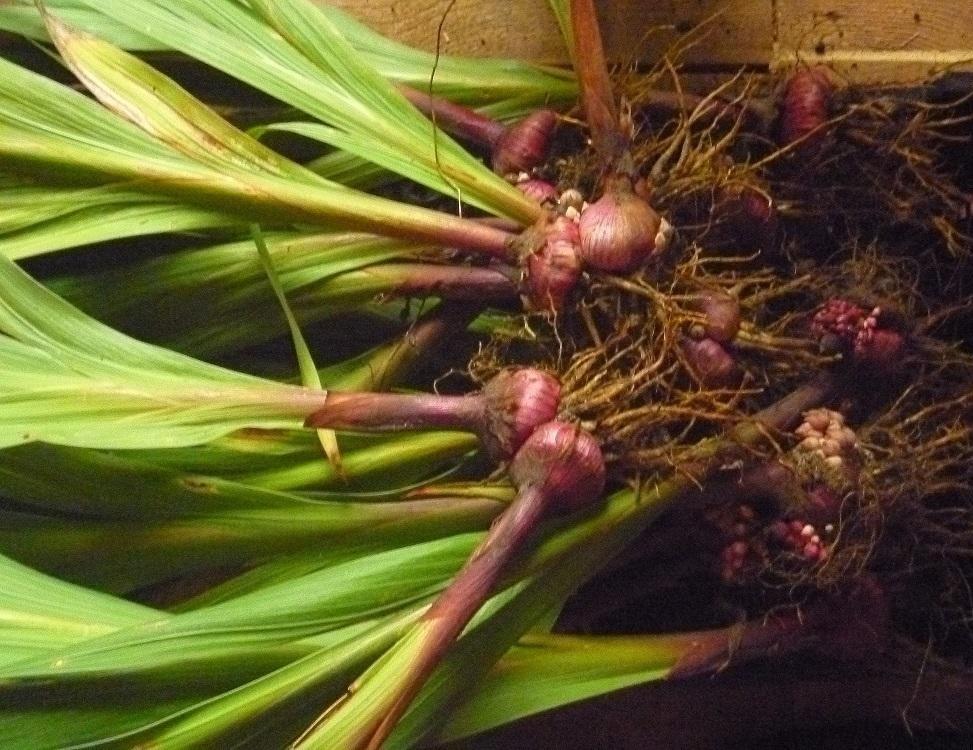
This can happen when growing gladiolus—unformed baby bulbs are mistaken for growths (they are removed). If the “unknown pathology” on your gladiolus looks the same as in the photo below, there is no cause for concern. It is not a disease.

6. Is it possible to cover gladiolus bulbs instead of digging them up?
Firstly, bulbs are dug up not only to protect them from freezing, but also to separate young bulbs, remove old corms if necessary, and discard diseased, damaged, or affected specimens.
Secondly, gladioli are considered a heat-loving crop that does not overwinter in open ground. It is difficult to determine the exact temperature range at which the bulb dies (this depends to some extent on varietal characteristics, soil conditions, planting depth, quality of care, etc.). Still, most sources suggest a range of 28.4–19.4°F (–2°C to –7°C). If the temperature in your region drops to these levels in winter, the bulbs should be dug up.

Only in southern regions can gladiolus corms be safely left in the ground over winter. Photo by Svetlana TO
However, there are exceptions—some readers of our website have had their corms survive in open ground during snowy winters. Young corms and offsets tend to overwinter better, as they are more “focused” on continuing the species.
In any case, each gardener will have to weigh the pros and cons and make an informed decision — to dig up or cover — on their own.
7. Clusters of baby bulbs hang from the dug-up gladiolus corms. What should be done with them?
Not every baby bulb is worth keeping: unformed ones (the very “growths” on the bulbs mentioned above) should be thrown away. Good ones can be used for propagation.
8. Why do gladioli become smaller every year?
Like all living things on Earth, they go through several stages of development and age, and they degenerate. Therefore, gladioli need to be rejuvenated: grown from young corms, offspring (with reasonable care, the offspring will bloom in the second year), or by purchasing new planting material. This is especially important for preserving your favorite variety.
Practical advice: if the bottom of the corm is wide and concave, then it is old and unlikely to bloom well. But you can get excellent offsets from it if you remove the flower stalk.

A bed of gladioli from second-year seedlings. Photo by Valery
9. Can a dark variety of gladiolus have a light-colored corm?
As a rule, gladiolus varieties with dark corms have dark-colored flowers, and vice versa.

It is impossible to determine the flower's color from the bulbs' color. Photo by Tatiana
10. Mold has been found on gladiolus corms in winter. How can they be preserved until spring?
Moldy bulbs must be treated with a fungicide (preferably before storage). The mold will disappear. Completely dry bulbs should be wrapped in craft paper and stored on the bottom shelf of the refrigerator or in the cellar (basement).
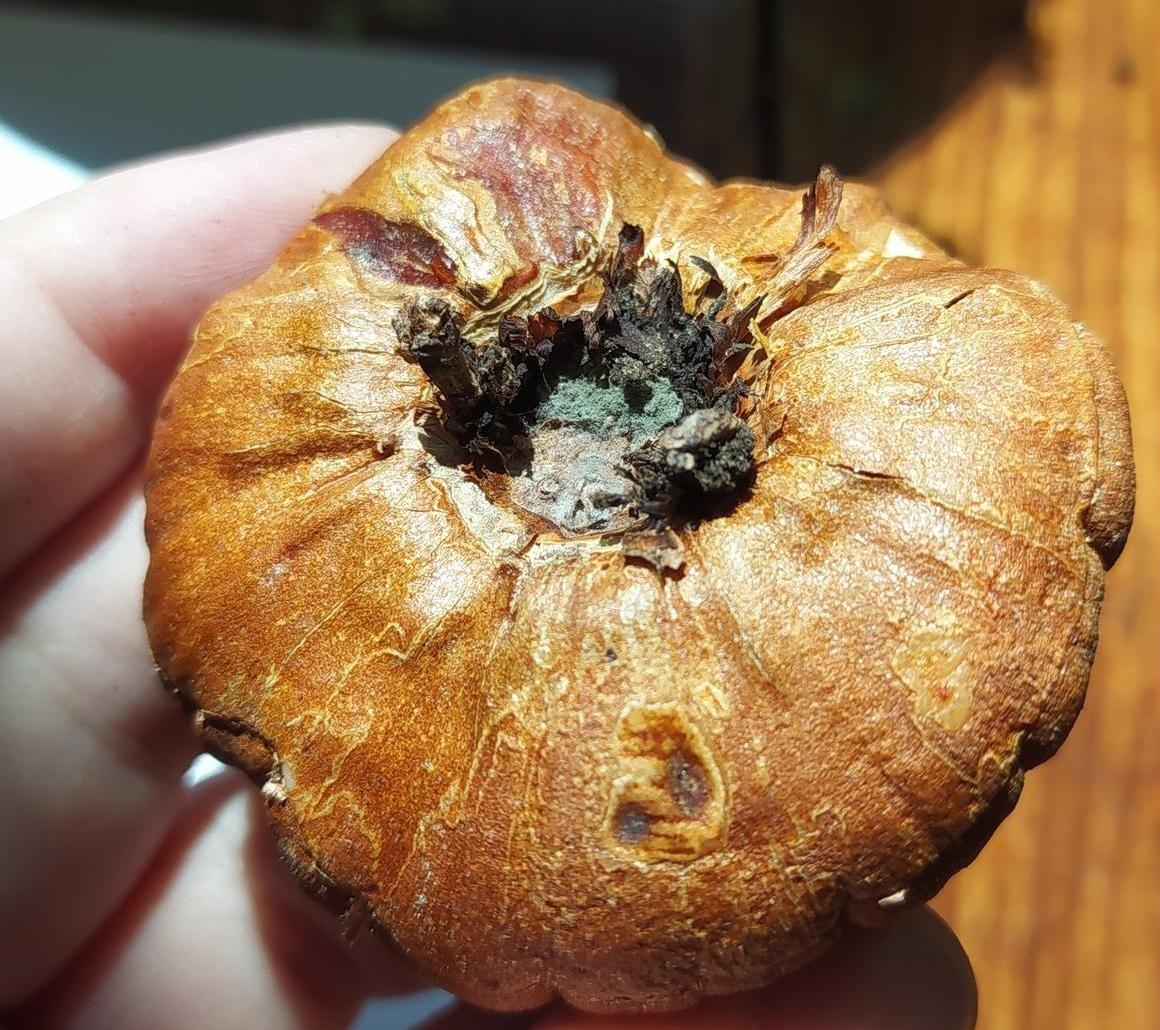
Bulbs in storage should be checked regularly to detect and destroy mold as early as possible. Photo by Alexandra Pavlova
11. Gladiolus corms sprouted in March. What should be done with them?
The winter storage period is a critical stage in the life of gladioli, so try to provide optimal conditions for the planting material—this benefits the bulbs and reduces hassle for the gardener. If, for some reason, “spring” has come earlier than expected for the gladioli, you will have to save the bulbs.

Gladioli sprouting. Photo by Lyubov Gavrutenko
When the sprouts have just appeared, place the bulbs in a box and refrigerate them in the vegetable compartment. If the sprouts are already 3-6 inches (8-14 cm) long, you can place the bulbs on the windowsill with the bottom facing down—this will slow down their growth (make sure they don't dry out).
If roots have started to grow, the bulbs need to be planted. Since gladioli do not like being transplanted, it is best to provide each with its own pot so they can be carefully transferred to open ground in the spring. Pots with planted bulbs are kept in a cool place and watered infrequently.
12. When to start sprouting gladioli?
As a rule, gladioli begin to sprout about 1 month before planting in open ground. Often, the corms themselves indicate that it is time: if sprouts are already appearing, then the process has begun. There are various ways to germinate: on moist sawdust (on moss, agroperlite, vermiculite, etc.), in a tray with water, laid out in a box or crate in one or two layers.

Germinating gladiolus bulbs on sawdust. Photo by Svetlana Kle
13. Gladiolus corms have crooked sprouts. What can be done to correct the curvature?
As a rule, gladiolus corms begin to sprout long before planting in open ground. To ensure the sprouts are straight from the start, the corms are carefully laid out for storage so they do not start growing in random positions. In this case, they overlooked it, and now the corm will have to be planted slightly “on its side” so that the sprout looks straight up (gladiolus continues to grow only in the direction it sprouted). This will not affect the quality of growth or the formation of the replacement bulb, and the gladiolus will not lean to one side or the other.
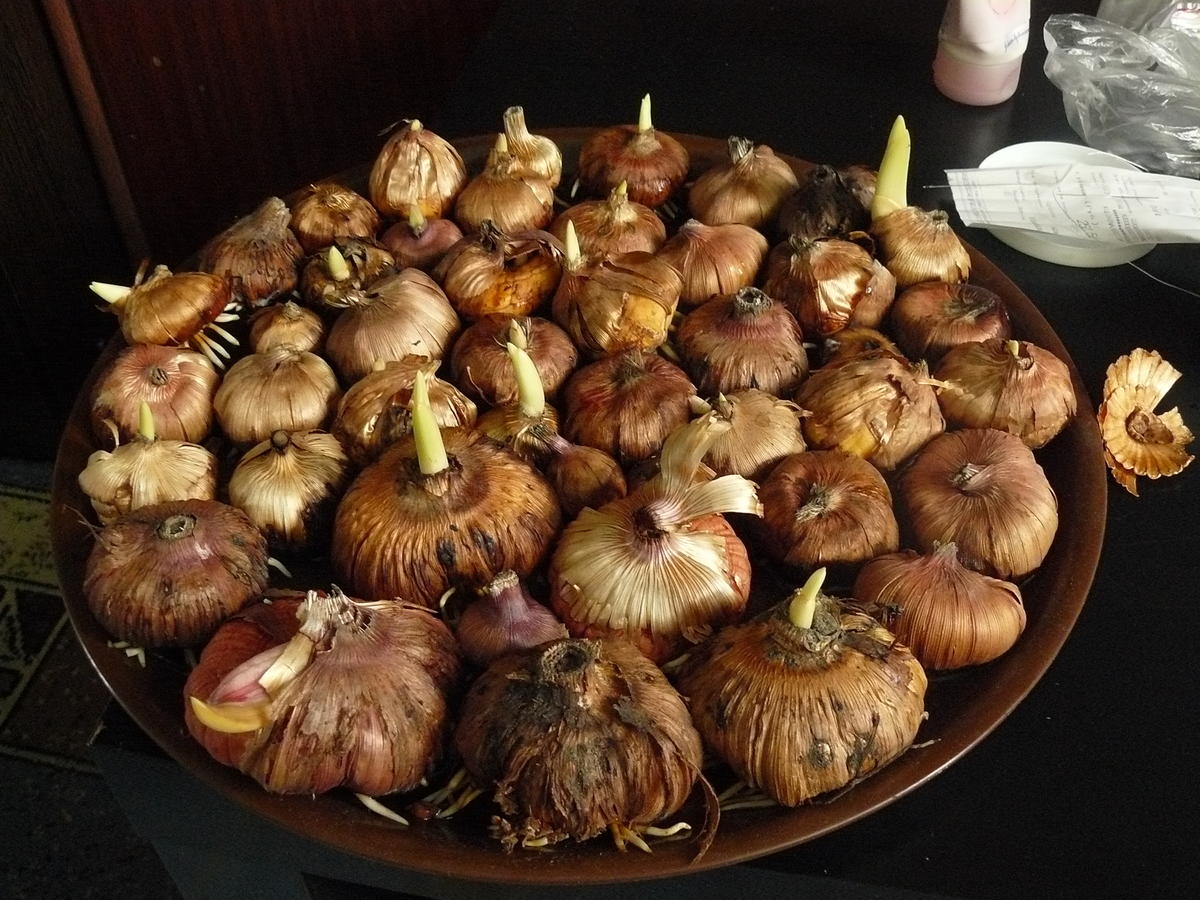
To prevent crooked shoots, store the bulbs upright on their bases. Gladioli sprouting. Photo by Kristina
14. Can I cut the bulbs in half and plant them?
If necessary, yes. It is best to do this in the spring, closer to planting time, and be sure to disinfect the cut area.
15. No matter what color gladioli I buy, after one season, they all turn pink and cream. What am I doing wrong?
This may be because gladiolus corms are dug up and stored together, and planted together. Often, capricious, delicate varieties from foreign producers either do not bloom or even grow in Russian conditions, but “local,” or more precisely, already adapted varieties, like everything, they grow together and produce monochrome flowers.
Practical advice: it is better to buy corms from reliable producers. Each variety should be stored in a separate bag and planted away from other varieties.
If you haven't found the answer to your question, please ask it in the comments. Together, we will surely find a solution to any problem related to growing gladioli.
Read my articles
https://stattya.com/how-to-plant-irises-a-foolproof-guide-for-blooming-success-854
https://stattya.com/how-to-plant-zucchini-to-get-a-bountiful-harvest-layout-spacing-and-rules-849
https://stattya.com/autumn-grape-planting-step-by-step-guide-for-seedlings-and-cuttings-793
https://stattya.com/how-to-create-and-maintain-a-tall-hedge-instead-of-a-fence-795
https://stattya.com/when-to-transplant-roses-in-autumn-timing-rules-valuable-tips-855
https://stattya.com/11-types-of-cabbage-photos-names-and-the-best-varieties-to-plant-832

You must be logged in to post a comment.